
TCG Card Shop Simulator Events Guide: Formats, Fees and Tournaments
How card events and tournaments work in TCG Card Shop Simulator: hourly fees, next-day price modifiers, table setup and joining your own event.

Events turn your tables into a second income stream, but the setup takes effect the next day. You choose the format in the Manage Events app, customers pay by the hour to play, and you settle up when each match ends.
What the game itself says
The store description lists hosting games as one of the five core activities. You set the card game format and the fee, then invite players to use your tables. It also warns that a dirty shop makes players leave.
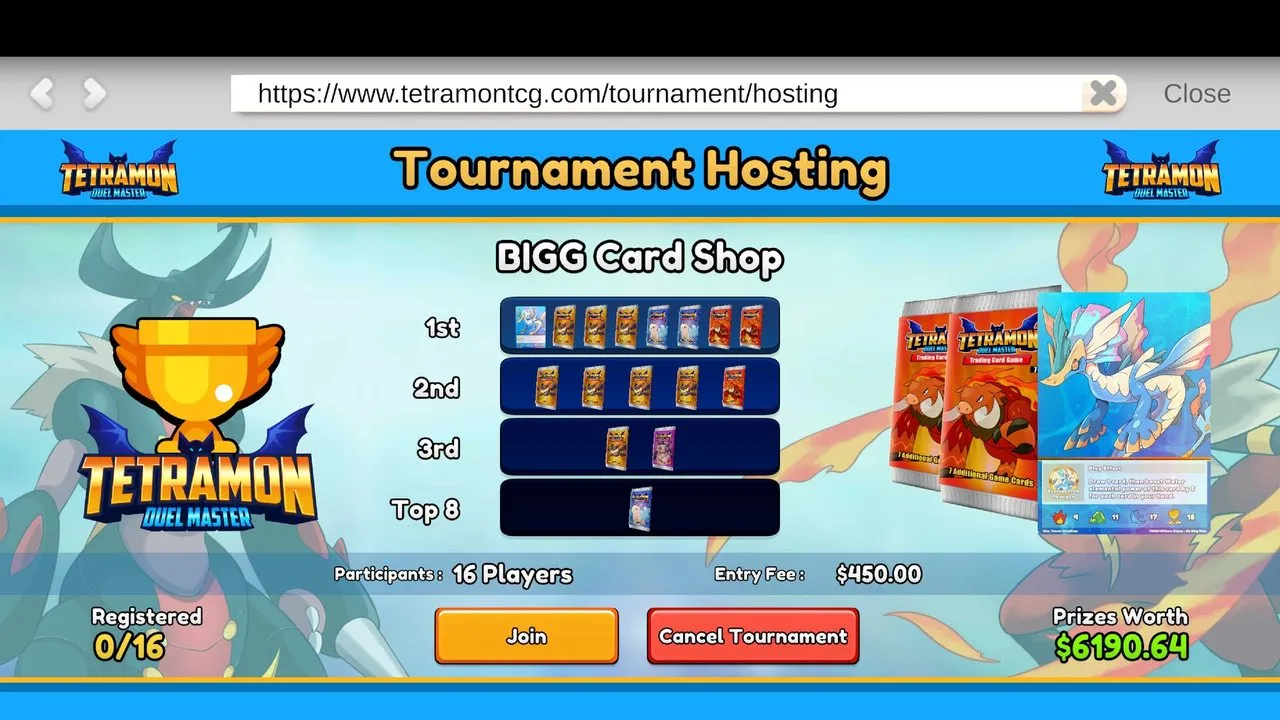
Patch 1.0 added a second half to this system: you can now enter your own tournament and keep the prizes if you place well.
The twelve formats and what they change
IGN’s official partnership video explains the structure clearly. There are twelve distinct formats customers can play during normal opening hours. Each one applies a pair of modifiers to your market prices for the following day: one pushes prices up, one pulls specific card types down.
You unlock better formats by accumulating playing customers. The top tier, which pushes bordered and foil card prices upward, needs more than 5,000 visitors to your tables.
| Element | How it works |
|---|---|
| Standard format | Costs the shop $0 per day, customers pay $7 per hour |
| Other formats | The shop pays a daily fee, customers pay a higher hourly rate |
| Activation timing | A format you set starts the next day |
| Match end | You collect double money and double experience |
| Table capacity | A large shop can run events for roughly 32 players |
The Standard figures come from a detailed Steam discussion reply and cover Early Access behaviour. The 5,000-visitor threshold and the next-day price modifiers come from IGN’s official video.
Set the format before you go to bed
Because a change only applies the next day, plan ahead. If you want the higher hourly rate tomorrow, select the format today.
The community advice is to run the highest format you have unlocked unless you specifically want a particular card type to rise in value. Its_Phantom_Fam’s video shows Golden Star paying $22 per hour, with the next format, EX Battle, paying more.
Tables cut into shelf sales
Every customer who sits down is a customer not buying packs. Two separate playthroughs make this point.
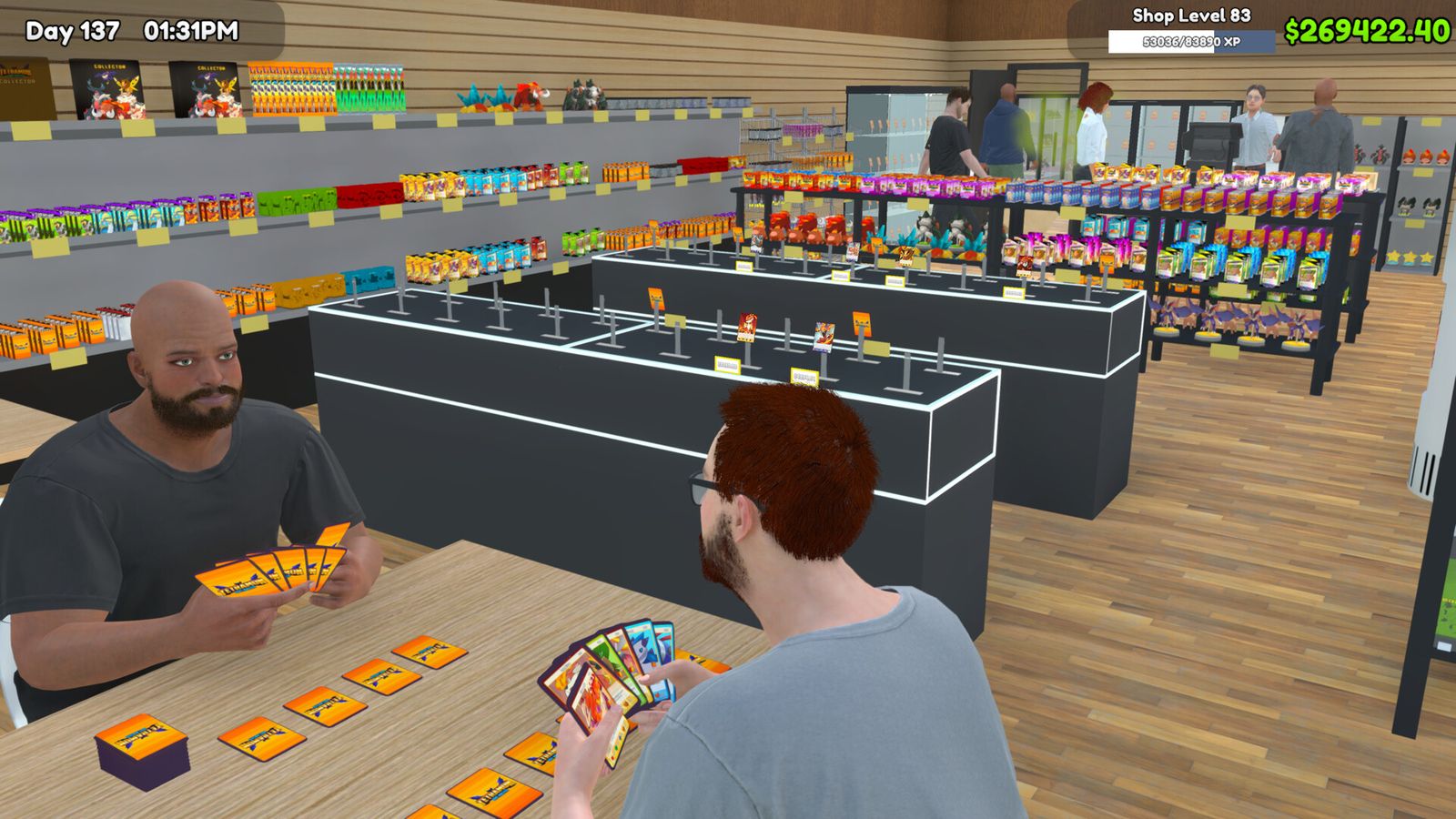
- Tenkiei Gaming calls card tables a throughput problem: they occupy customers, and occupied customers block new arrivals from spawning.
- Keldor recommends boxing tables away until you own genuinely expensive cards worth displaying.
If you are optimising revenue, keep the table count low. If you enjoy the shop fantasy, keep them out and accept the trade.
Joining your own tournament
Patch 1.0 lets you take part in the events you host. After the bracket resolves, prizes are settled by ranking, and winning means you keep them.
Two practical notes from recorded play. You can host very large brackets if you own enough tables, and you should label your tables before the event starts or the bracket becomes hard to follow.
Playing also pays. Customers hand over card packs when you finish a duel against them, and there is an achievement for winning fifty duels.
Cleanliness is part of the event budget
Tournament players leave when the shop gets unpleasant. The official store description says this directly, and the obvious countermeasure is the same one you use for normal customers: a scent machine near the entrance and a clean floor.
What is still unclear
The developer has never published the full table of twelve formats with their daily fees and hourly rates. This page lists two confirmed examples rather than inventing the rest.
Two community claims are also narrower than they look. The “double money and double experience” figure comes from a single forum explanation, and the player who wrote it also said the card price effects were hard to observe in practice.